
Balance Exercises Seniors Can Do Without Leaving Their Living Rooms
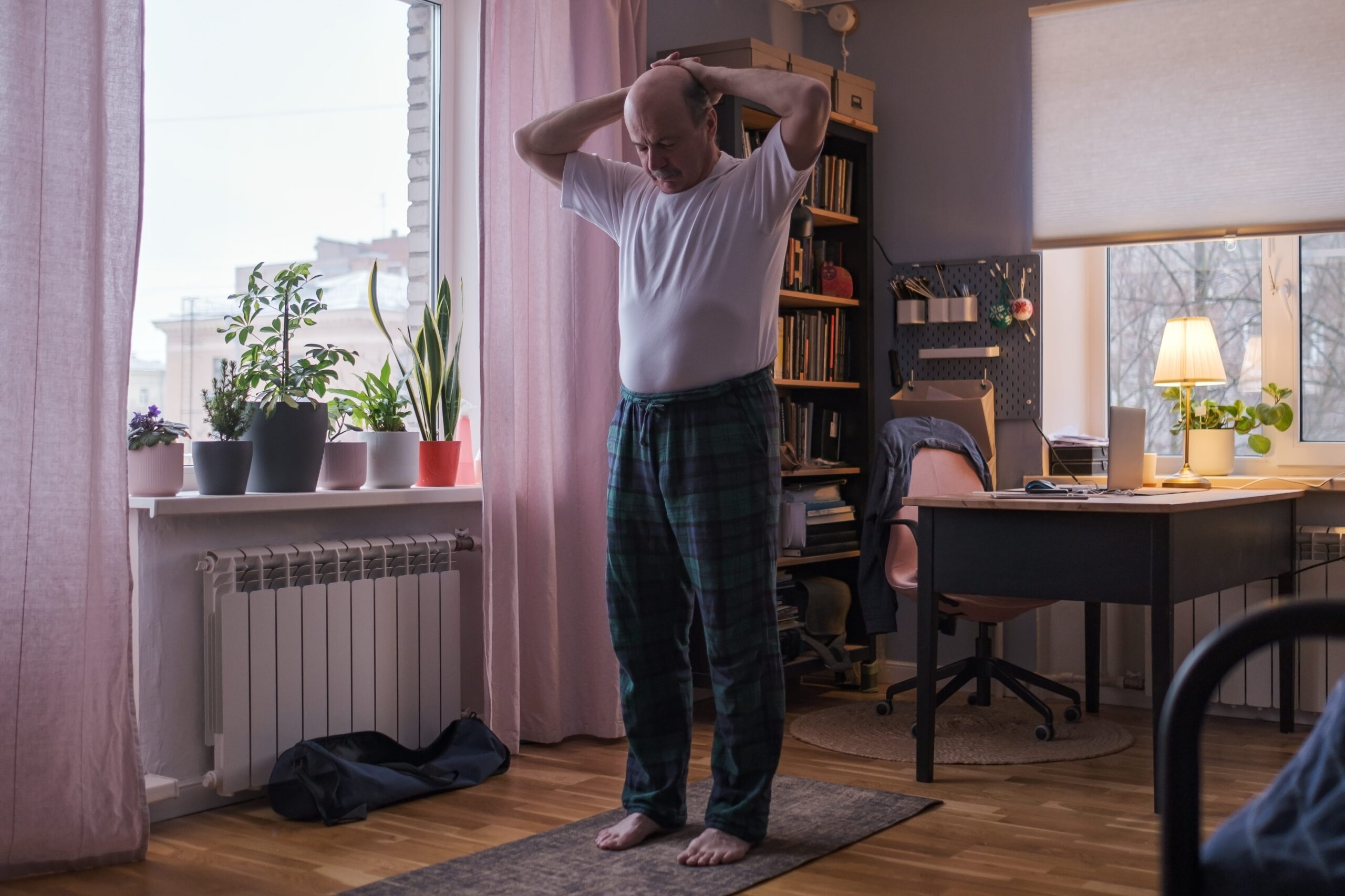
As we age, maintaining balance becomes more than just a physical challenge—it’s about preserving independence, confidence, and quality of life. Falls are no laughing matter for seniors, with statistics showing that one in four older adults experiences a fall each year, making balance exercises not just recommended, but essential.
The good news? You don’t need a gym membership or fancy equipment to improve your stability. Your living room can become your personal balance training studio, offering a safe and comfortable environment to build strength and reduce fall risks.
At Compassionate Caregivers, we understand that mobility isn’t just about movement—it’s about maintaining dignity and empowering seniors to live life on their own terms. Our Columbus Senior Home Care professionals have witnessed firsthand how targeted, gentle exercises can transform a senior’s confidence and physical capabilities.
“Balance is not something you find, it’s something you create” – Unknown
Whether you’re a senior looking to stay active, a caregiver supporting a loved one, or a healthcare professional seeking practical advice, these top 10 balance exercises are designed to be safe, effective, and adaptable to individual fitness levels. Remember, always consult with a healthcare professional before starting any new exercise routine, and listen to your body’s signals.
Why Balance Matters More Than You Think
- Reduces fall risk by up to 50%
- Improves overall muscle strength
- Enhances cognitive coordination
- Boosts confidence and independence
Ready to take the first step towards better balance? Let’s dive into exercises that can be performed safely in the comfort of your own home.
1. The Single Leg Stand
The Single Leg Stand might sound simple, but it’s a powerhouse exercise for improving balance and strengthening core muscles. Think of it as your personal stability training—no gym equipment required, just you and your living room floor.
How to Perform the Single Leg Stand
- Start near a sturdy chair or countertop for support
- Stand straight with feet hip-width apart
- Slowly shift your weight to one leg
- Gently lift the opposite foot a few inches off the ground
- Hold the position for 10-15 seconds
- Alternate legs and repeat
Pro tip: If holding for 10 seconds feels challenging, that’s perfectly okay! Start with 3-5 seconds and gradually build up your endurance. Remember, balance is a skill that improves with practice.
“Balance is not something you find, it’s something you create through consistent effort” – Compassionate Caregivers Philosophy
Safety First: Modifications for Different Fitness Levels
- Beginner Level: Keep your lifted foot closer to the ground
- Intermediate: Try to lift your foot higher
- Advanced: Close your eyes to increase difficulty (with support nearby)
For seniors managing conditions like arthritis or recovering from injuries, our comprehensive elderly care services can provide personalized guidance to ensure safe and effective exercise routines.
Benefits Beyond Balance
The Single Leg Stand isn’t just about preventing falls. It also:
- Strengthens leg muscles
- Improves proprioception (body awareness)
- Enhances core stability
- Boosts confidence in movement
A little daily practice can make a significant difference in your overall mobility and independence. Just a few minutes each day can help you maintain the strength and confidence to continue enjoying life on your own terms.
2. Heel-to-Toe Walk
Imagine walking a tightrope in your living room—that’s essentially what the Heel-to-Toe Walk mimics, but with zero circus skills required! This exercise is like a sobriety test, minus the awkwardness, designed to challenge and improve your balance in a fun, controlled manner.
How to Master the Heel-to-Toe Walk
- Find a clear, open space in your living room
- Stand with your feet together
- Place the heel of one foot directly in front of the toes of the other foot
- Walk forward slowly, as if you’re walking on an imaginary straight line
- Take 10-15 steps, keeping your balance
- Use a wall or chair for support if needed
“Balance is not just about standing still, but moving with purpose and confidence” – Compassionate Caregivers Wisdom
Pro Tips for Success
- Focus Point: Pick a spot on the wall to maintain your balance
- Posture: Keep your head up and shoulders relaxed
- Breathing: Take slow, steady breaths to maintain calm
This exercise isn’t just about preventing falls—it’s a full-body workout that challenges your brain-body connection. By practicing the Heel-to-Toe Walk, you’re essentially giving your nervous system a mini-workout, improving coordination and spatial awareness.
Safety Modifications
- Start near a wall or have a sturdy chair within reach
- Wear non-slip socks or go barefoot on a carpeted surface
- If unsteady, start with shorter distances
For seniors looking for personalized care and exercise guidance, our Columbus Senior Home Care professionals can provide tailored support to help you maintain independence and confidence.
Quick Benefits Breakdown
- Improves walking stability
- Enhances core strength
- Boosts cognitive-motor coordination
- Builds confidence in movement
Remember, consistency is key. Just a few minutes of practice daily can make a significant difference in your balance and overall mobility. Who knew walking in a straight line could be such a powerful exercise?
3. Chair Sit-to-Stand
The Chair Sit-to-Stand exercise is like a secret weapon in the world of senior fitness—simple yet incredibly effective. Think of it as functional fitness that mimics everyday movements, helping you maintain the strength and independence needed to navigate daily life with confidence.
Why Chair Sit-to-Stand Matters
This exercise isn’t just about sitting and standing. It’s a full-body movement that targets critical muscle groups, improves leg strength, and enhances overall mobility. For seniors, it’s like a daily tune-up for your body’s most essential movement patterns.
Step-by-Step Guide
- Choose a sturdy, firm chair without wheels
- Sit at the front edge of the chair with feet flat on the floor
- Cross your arms over your chest or extend them forward
- Lean slightly forward and push through your heels
- Slowly rise to a standing position
- Pause briefly while standing
- Slowly lower back to a seated position
- Repeat 8-10 times
“Movement is the song of the body” – Compassionate Caregivers Philosophy
Pro Tips for Success
- Posture: Keep your back straight
- Breathing: Exhale as you stand, inhale as you sit
- Pace: Move slowly and controlled
Safety Modifications
- Use a chair with armrests for additional support
- Place the chair against a wall for extra stability
- Start with fewer repetitions if you feel challenged
For seniors managing mobility challenges, our Senior Home Care professionals can provide personalized guidance to ensure safe and effective exercise routines.
Muscles Worked
- Quadriceps
- Hamstrings
- Glutes
- Core muscles
The beauty of the Chair Sit-to-Stand is its simplicity. It’s an exercise that prepares you for real-life movements—getting up from chairs, using the toilet, or stepping in and out of vehicles. By practicing this movement, you’re not just exercising; you’re maintaining your independence.
Quick Benefits Breakdown
- Improves leg strength
- Enhances balance and stability
- Boosts confidence in movement
- Reduces fall risk
Remember, consistency is key. Even if you can only do a few repetitions initially, you’re making progress. Every movement counts, and your body will thank you for the attention and care.
4. Rock the Boat
Get ready to channel your inner sailor with the “Rock the Boat” exercise—a playful yet powerful balance challenge that doesn’t require leaving the comfort of your living room. This exercise is all about controlled movement and building core stability, proving that improving balance can actually be fun!
What Makes Rock the Boat Special?
Unlike traditional balance exercises, “Rock the Boat” mimics the gentle sway of waves, training your body to maintain equilibrium while creating micro-movements. It’s like giving your balance system a gentle workout without the risk of falling overboard.
Step-by-Step Guide
- Stand with feet hip-width apart
- Keep your body weight evenly distributed
- Slowly shift your weight to one side
- Gently lift the opposite foot slightly off the ground
- Hold for 5-10 seconds
- Return to center and repeat on the other side
“Balance is not a destination, it’s a continuous journey of small, deliberate movements” – Compassionate Caregivers Wisdom
Safety First: Modifications for Different Levels
- Beginner: Keep a chair or wall within arm’s reach
- Intermediate: Increase hold time to 15 seconds
- Advanced: Close your eyes to increase difficulty
Pro Tips for Mastering the Rock the Boat
- Focus on a fixed point to maintain balance
- Breathe slowly and steadily
- Engage your core muscles
- Move with intention and control
For seniors seeking personalized balance training, our Dublin Home Care professionals can provide expert guidance tailored to individual needs and capabilities.
Muscles Engaged During Rock the Boat
- Leg stabilizer muscles
- Core muscles
- Ankle stabilizers
- Lower back muscles
Benefits Beyond Balance
This exercise isn’t just about preventing falls. It offers a holistic approach to senior fitness by:
- Improving proprioception (body awareness)
- Enhancing joint stability
- Boosting confidence in movement
- Promoting neurological coordination
Remember, balance is a skill that improves with practice. Start slow, be patient with yourself, and celebrate every small improvement. Your body is capable of more than you might think!
“The secret of balance is not to hold still, but to move with grace and purpose” – Compassionate Caregivers Philosophy
Whether you’re a senior looking to maintain independence or a caregiver supporting a loved one, the “Rock the Boat” exercise offers a fun, engaging way to build strength and stability—one gentle sway at a time.
5. Wall Push-ups
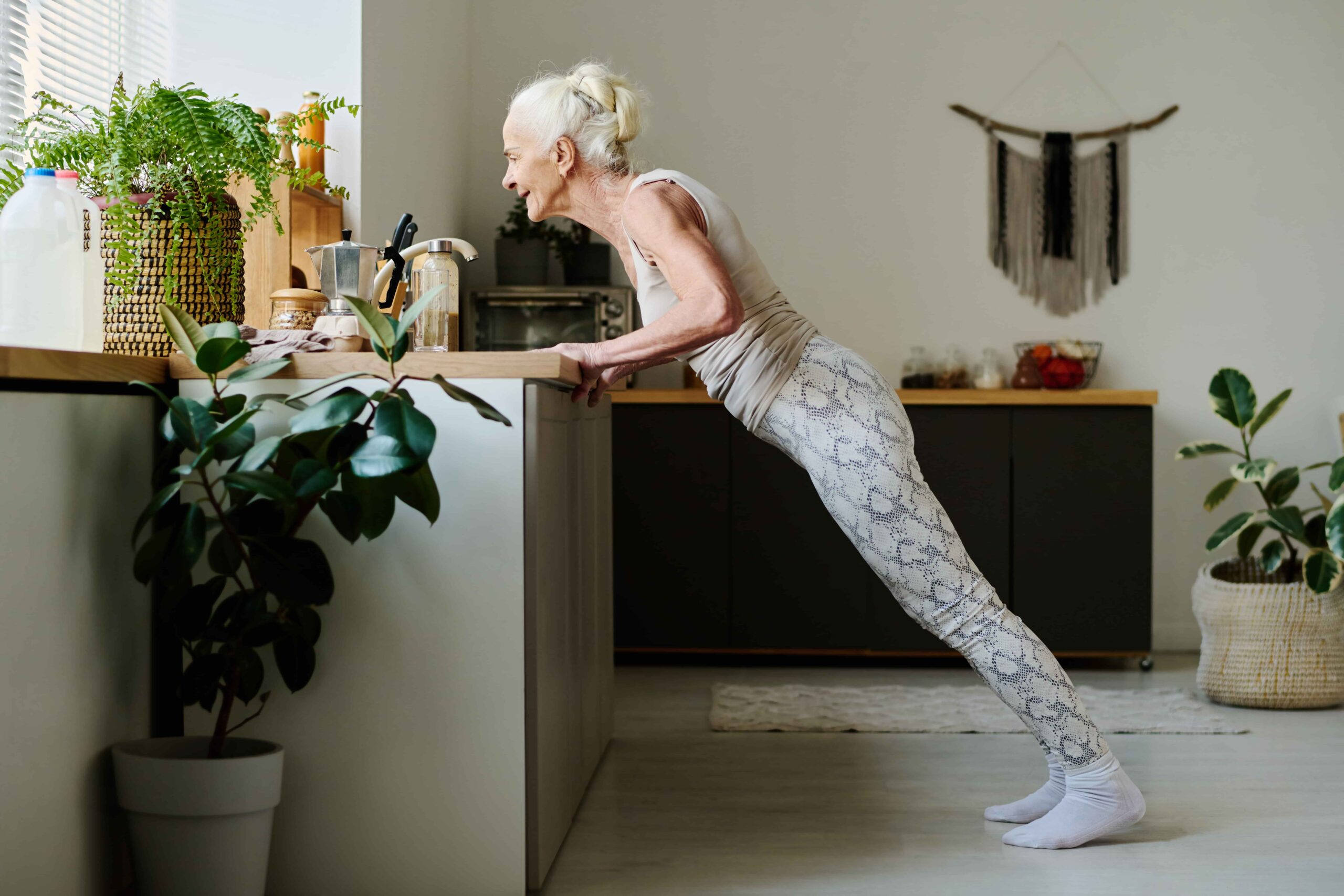
Wall push-ups are like the gentler, more approachable cousin of traditional floor push-ups—perfect for seniors looking to build upper body strength without putting excessive strain on joints. Think of it as strength training with training wheels, offering a safe and effective way to improve muscle tone and stability right in your living room.
Why Wall Push-ups Are a Game-Changer
These modified push-ups provide an excellent full-body workout that targets multiple muscle groups while being incredibly joint-friendly. They’re especially beneficial for seniors looking to maintain upper body strength and improve overall functional fitness without the risks associated with traditional push-ups.
Step-by-Step Technique
- Find a sturdy, flat wall with no obstacles
- Stand arm’s length away from the wall
- Place hands flat against the wall at shoulder height
- Keep fingers pointing upward, slightly wider than shoulder-width
- Lean in slowly, bending your elbows
- Bring your chest close to the wall
- Push back to the starting position
- Repeat 8-12 times
“Strength doesn’t come from what you can do, it comes from overcoming what you thought you couldn’t” – Compassionate Caregivers Philosophy
Safety Modifications
- Start with fewer repetitions if you feel challenged
- Use a chair nearby for additional support if needed
- Wear comfortable, non-slip shoes
- Stop if you experience any pain or discomfort
Muscles Engaged During Wall Push-ups
- Chest muscles (pectorals)
- Shoulder muscles (deltoids)
- Arm muscles (triceps)
- Core stabilizer muscles
For seniors requiring personalized exercise guidance, our expert caregivers can provide tailored support to ensure safe and effective workout routines.
Pro Tips for Maximum Benefit
- Keep your body in a straight line
- Breathe consistently—exhale as you push, inhale as you return
- Maintain a controlled, steady pace
- Focus on proper form over quantity
Additional Benefits
Wall push-ups offer more than just muscle strength. They provide:
- Improved upper body mobility
- Enhanced joint flexibility
- Increased bone density
- Better overall functional fitness
“Every small movement is a step towards maintaining your independence” – Compassionate Caregivers Wisdom
Remember, consistency is key. Even if you can only do a few repetitions initially, you’re making progress. Your body will appreciate the attention and care, and you’ll gradually build strength and confidence with regular practice.
Wall push-ups prove that effective exercise doesn’t require fancy equipment or gym memberships—just a wall, determination, and a positive attitude. Start your journey to improved strength and balance, one gentle push at a time!
6. Ankle Circles
Ankle circles might seem simple, but they’re like the unsung heroes of balance and mobility exercises. These tiny rotations pack a powerful punch in maintaining joint flexibility, improving circulation, and preventing stiffness—all without requiring you to leave your favorite chair.
Why Ankle Circles Matter
As we age, our ankles can become less flexible, which increases the risk of trips and falls. Ankle circles are a gentle yet effective way to keep these crucial joints healthy, mobile, and ready for action. Think of them as a daily “tune-up” for your lower legs.
How to Perform Ankle Circles
- Sit comfortably in a sturdy chair
- Extend one leg straight out
- Lift your foot slightly off the ground
- Rotate your ankle in a smooth, circular motion
- Do 10 circles clockwise
- Then 10 circles counterclockwise
- Repeat with the other ankle
“Small movements create big transformations” – Compassionate Caregivers Philosophy
Safety and Modifications
- Use a chair with back support
- Keep movements slow and controlled
- Stop if you experience any pain
- Use a cushion for additional comfort
For seniors needing personalized mobility support, our Dublin Home Care professionals can provide expert guidance tailored to individual needs.
Pro Tips for Maximum Benefits
- Warm up your legs with gentle stretches first
- Breathe naturally during the exercise
- Maintain good posture
- Stay hydrated
Muscles and Joints Engaged
- Ankle joint
- Calf muscles
- Foot muscles
- Lower leg tendons
Additional Health Benefits
Ankle circles aren’t just about movement—they offer a range of health advantages:
- Improve blood circulation
- Reduce risk of blood clots
- Enhance joint lubrication
- Prevent muscle stiffness
“Mobility is freedom, and every small movement counts” – Compassionate Caregivers Wisdom
Remember, consistency is key. Even a few minutes of ankle circles daily can make a significant difference in your overall mobility and comfort. Your ankles will thank you for the attention!
Who knew something as simple as rotating your ankles could be such a powerful tool in maintaining your independence and quality of life? Start your ankle circle routine today, and keep those joints happy and healthy!
7. Marching in Place
Marching in place is like bringing a mini-parade into your living room—minus the brass band and fancy uniforms! This deceptively simple exercise is a powerhouse for improving balance, coordination, and cardiovascular fitness, all while staying perfectly stationary.
The Magic of Marching
Think of marching in place as a low-impact, high-reward exercise that engages multiple muscle groups and challenges your balance system. It’s like giving your body a full-body workout without taking a single step forward.
How to Perform the Perfect Living Room March
- Stand near a chair or wall for support if needed
- Keep your back straight and core engaged
- Lift one knee to hip height
- Lower it back down
- Alternate legs in a marching motion
- Aim for 30 seconds to start, gradually increasing duration
“Movement is the rhythm of life, and marching is its steady beat” – Compassionate Caregivers Philosophy
Safety Modifications for Different Fitness Levels
- Beginner: Lift knees only a few inches off the ground
- Intermediate: Lift knees to hip height
- Advanced: Add arm movements for increased challenge
For seniors seeking personalized exercise guidance, our Dublin Home Care professionals can provide tailored support to ensure safe and effective workout routines.
Pro Tips for Marching Success
- Maintain good posture
- Keep movements controlled and steady
- Breathe naturally
- Use a mirror to check your form
Muscles Engaged During Marching
- Quadriceps
- Hamstrings
- Hip flexors
- Core muscles
- Calves
Surprising Benefits Beyond Balance
Marching in place offers more than just physical advantages:
- Improves cardiovascular endurance
- Enhances cognitive coordination
- Boosts mood and energy levels
- Increases overall body awareness
“Every step in place is a step towards maintaining your independence” – Compassionate Caregivers Wisdom
A little secret? Marching can be fun! Put on some music, add a bit of rhythm, and suddenly you’re not just exercising—you’re having a mini dance party in your living room. Who says senior fitness can’t be enjoyable?
Remember, consistency is key. Start with short marching sessions and gradually build up your endurance. Your body is capable of amazing things, and every march is a celebration of your strength and resilience!
8. Toe Raises
Here’s the section for Toe Raises:
Toe raises might seem like a tiny movement, but they’re secretly a superhero exercise for seniors looking to improve balance, strengthen lower leg muscles, and boost overall stability. Think of them as your feet’s daily workout routine—no gym membership required!
Why Toe Raises Are a Game-Changer
These simple yet powerful exercises target crucial muscles in your feet and ankles that often get overlooked. By strengthening these muscle groups, you’re essentially creating a more stable foundation for every step you take, reducing fall risks and improving overall mobility.
Step-by-Step Toe Raise Technique
- Stand near a chair or wall for support
- Keep feet hip-width apart
- Slowly rise up onto your toes
- Hold for 2-3 seconds
- Gently lower back down
- Repeat 10-15 times
“Strong feet are the foundation of confident movement” – Compassionate Caregivers Philosophy
Safety Modifications
- Use a chair or countertop for balance
- Start with fewer repetitions if challenging
- Wear supportive, non-slip shoes
- Move slowly and controlled
For seniors needing personalized mobility support, our Dublin Home Care professionals can provide expert guidance tailored to individual needs.
Muscles Engaged During Toe Raises
- Calf muscles (gastrocnemius)
- Ankle stabilizers
- Foot intrinsic muscles
- Achilles tendon
Pro Tips for Maximum Benefit
- Keep core engaged
- Breathe steadily
- Focus on smooth, controlled movements
- Imagine pushing through the balls of your feet
Surprising Benefits Beyond Balance
Toe raises offer more than just stability improvements:
- Improve ankle flexibility
- Enhance circulation in lower legs
- Prevent muscle stiffness
- Reduce risk of foot-related injuries
“Every rise is a step towards maintaining your independence” – Compassionate Caregivers Wisdom
A little fitness secret? Toe raises can be done almost anywhere—while brushing teeth, waiting in line, or watching TV. They’re the ultimate stealth exercise for staying strong and stable!
Remember, progress is personal. Some days you might feel strong, others not so much. The key is consistent, gentle practice. Your feet will appreciate the attention, and you’ll be building a solid foundation for confident, independent movement.
9. Standing Leg Swings
Standing leg swings are like a dynamic dance for your lower body—a fluid, rhythmic exercise that challenges balance, improves flexibility, and strengthens muscle groups often forgotten in traditional workouts. Think of it as a gentle yet powerful way to wake up your legs and boost overall mobility, all from the comfort of your living room.
The Science Behind Leg Swings
This exercise isn’t just about moving your leg back and forth. It’s a sophisticated movement that engages multiple muscle groups, improves joint range of motion, and helps train your body’s proprioceptive system—essentially your internal GPS for balance and coordination.
How to Perform Standing Leg Swings
- Stand next to a chair or wall for support
- Hold onto the support with one hand
- Shift your weight onto the standing leg
- Gently swing the other leg forward and back
- Keep the movement smooth and controlled
- Do 10-15 swings, then switch legs
“Balance is a journey of continuous, gentle movements” – Compassionate Caregivers Philosophy
Safety Modifications
- Start with smaller, slower swings
- Use a sturdy chair or wall for balance
- Wear comfortable, non guidance tailored to individual needs and capabilities. Muscles Engaged During Leg Swings
- Hip flexors
- Quadriceps
- Hamstrings
- Core stabilizer muscles
- Ankle and foot muscles
- Maintain an upright posture
- Keep your standing leg slightly bent
- Breathe naturally
- Focus on smooth, controlled movements
- Improve hip joint mobility
- Enhance lower body flexibility
- Reduce muscle stiffness
- Increase body awareness
- Prevent potential mobility restrictions
10. Eye Tracking Exercise
The Eye Tracking Exercise might sound like something from a sci-fi movie, but it’s actually a powerful neurological workout that plays a crucial role in maintaining balance and spatial awareness. Think of it as a gym session for your eyes and brain, helping seniors improve coordination and reduce the risk of falls—all without leaving your favorite armchair.
Why Eye Tracking Matters
As we age, our visual-vestibular system can become less efficient. This exercise helps retrain your brain’s ability to process visual information quickly and accurately, which is essential for maintaining balance and preventing disorientation.
How to Perform the Eye Tracking Exercise
- Sit comfortably in a sturdy chair
- Keep your head completely still
- Hold your thumb out at arm’s length
- Move your thumb slowly from side to side
- Track your thumb’s movement with your eyes only
- Repeat 10-15 times in each direction
“Your eyes are windows to balance, and every movement is a chance to strengthen them” – Compassionate Caregivers Philosophy
Safety Modifications
- Move slowly and deliberately
- Stop if you feel dizzy
- Take breaks if you experience eye strain
- Use good lighting
For seniors seeking personalized neurological support, our Dublin Home Care professionals can provide expert guidance tailored to individual needs.
Pro Tips for Effective Eye Tracking
- Keep your head absolutely still
- Breathe normally
- Focus on smooth, controlled eye movements
- Practice in a calm, quiet environment
Surprising Benefits Beyond Balance
Eye tracking exercises offer multiple advantages:
- Improve cognitive processing speed
- Enhance neurological coordination
- Reduce risk of falls
- Maintain visual processing skills
- Support overall brain health
“Every focused gaze is a step towards maintaining your neurological fitness” – Compassionate Caregivers Wisdom
Advanced Variations
Once you’ve mastered the basic exercise, try these challenging variations:
- Track a moving object vertically
- Use a small, distant object for tracking
- Practice with both slow and quick movements
A little fitness humor: Who knew staring could be such a workout? Your eyes are basically doing tiny fitness push-ups with this exercise!
Remember, neurological fitness is just as important as physical fitness. These small, intentional movements can make a significant difference in maintaining your independence and confidence. Every eye movement is a mini-victory in your balance and coordination journey.
Remember, consistency is key. Start slowly, listen to your body, and consult with a healthcare professional before beginning any new exercise routine. These balance exercises can help seniors maintain independence, reduce fall risks, and improve overall quality of life.